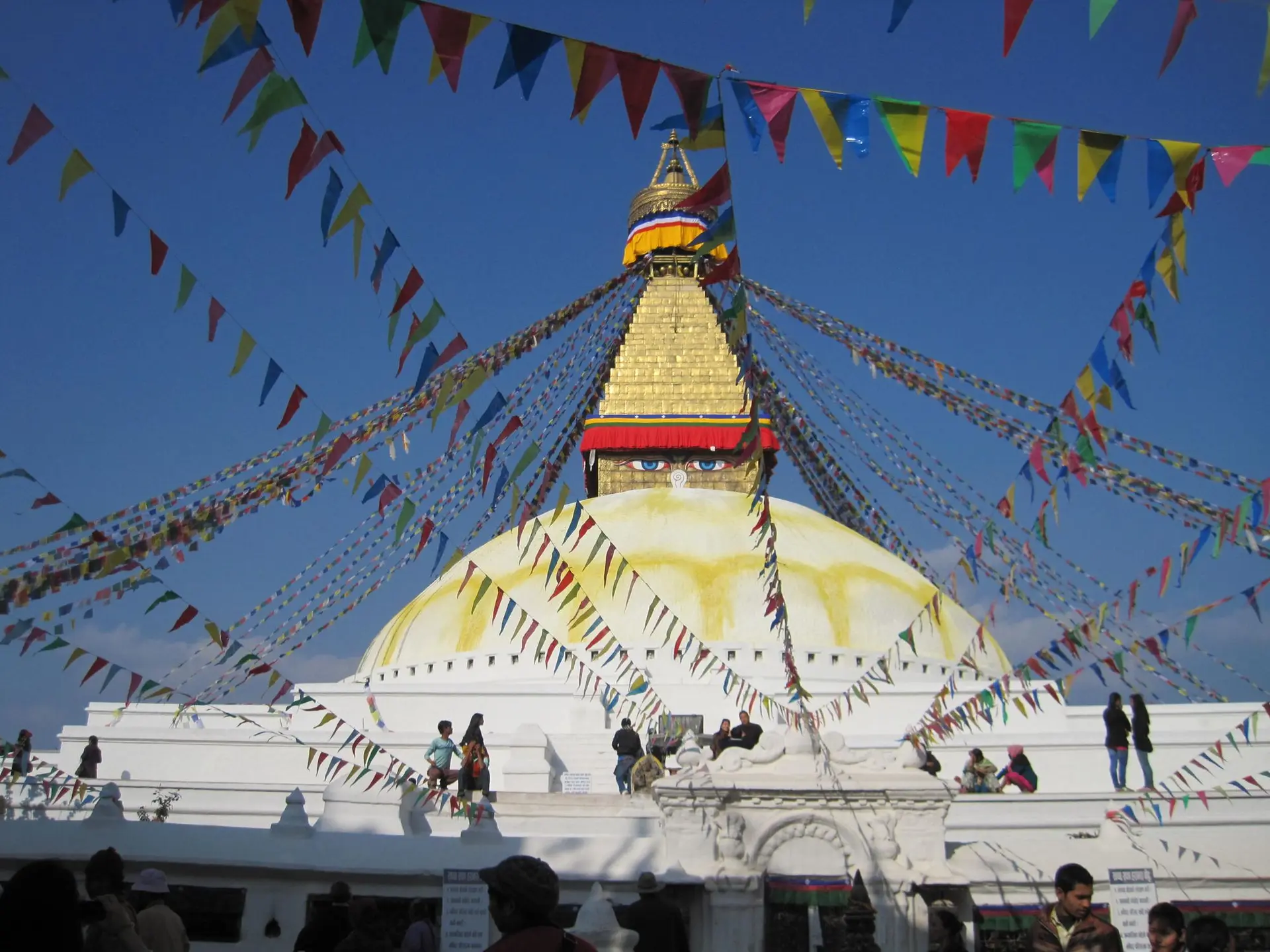
Heritage tours
Kathmandu City Tour: Four World Heritage Sites in a Day
Pashupatinath, Boudhanath, Swayambhunath and Kathmandu Durbar Square in one day, with your own guide and car, starting from your hotel.
About 8 hoursfrom $37
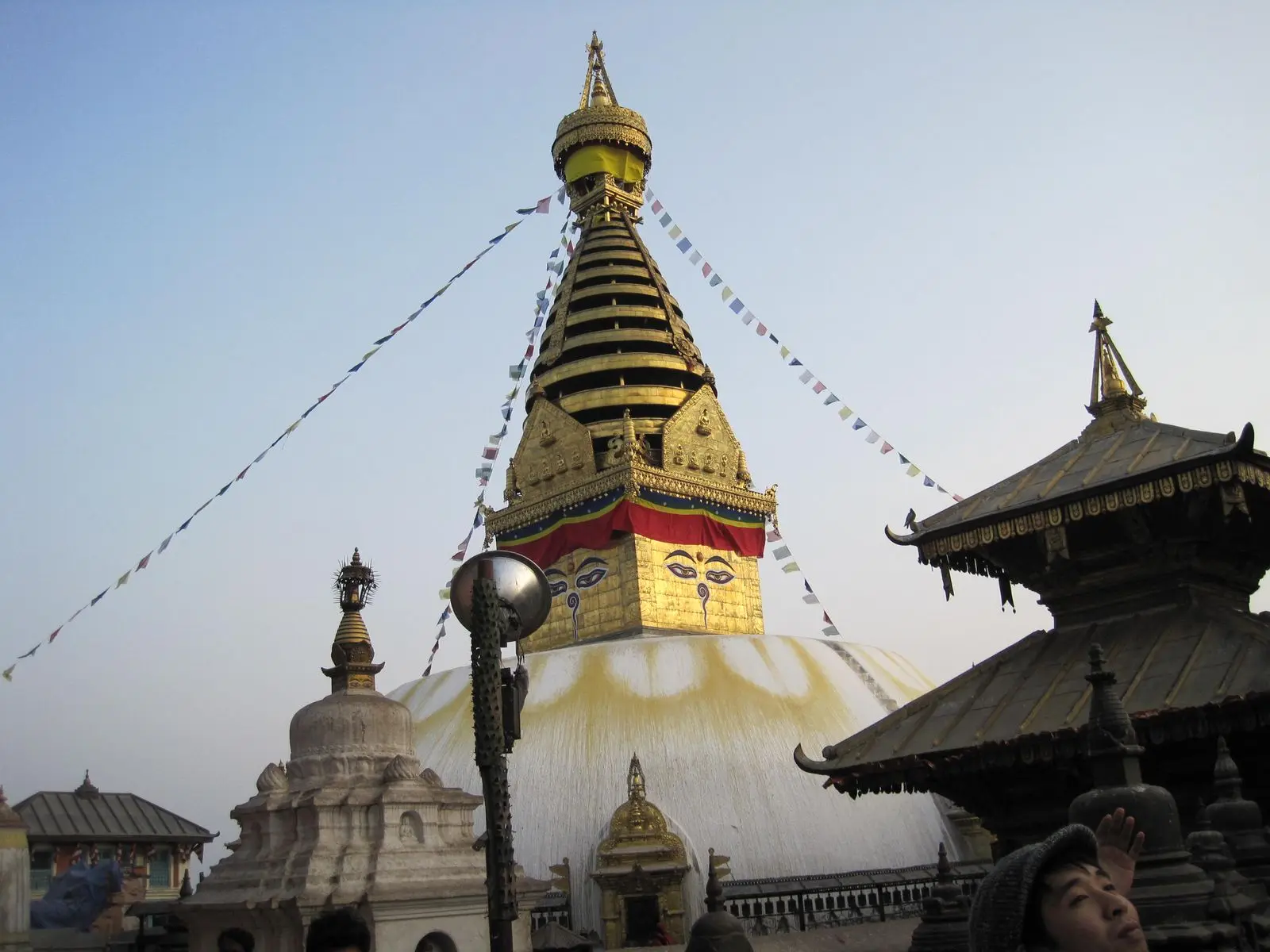
The hilltop stupa west of Kathmandu: the old stairway, the shrines, the famous monkeys and the best view over the whole city.
Swayambhunath stands on a hill on the western edge of Kathmandu, and it's one of the oldest religious sites in the valley. Legend has it that the valley was once a lake, and that a lotus flower growing in it gave off a light, which became the self-existent (swayambhu) stupa.
The traditional way up is the eastern stairway of around 365 steps, past stone Buddhas and dozing monkeys. If that sounds like hard work, there's also a road to the western side, close to the top, which is how most tours arrive.
Rhesus monkeys live all over the hill, which is why visitors call it the Monkey Temple. They're entertaining to watch, but they're also quick-fingered, so keep any food out of sight and please don't feed them.
NPR 200 for foreign visitors (checked October 2026). Swayambhunath is part of our Kathmandu city tour.
Heritage tours
Pashupatinath, Boudhanath, Swayambhunath and Kathmandu Durbar Square in one day, with your own guide and car, starting from your hotel.
2 daysHeritage tours
All seven of the valley's World Heritage monument zones, from Changu Narayan to Swayambhunath, over two unhurried days with the same guide.