Heritage tours
Kathmandu City Tour: Four World Heritage Sites in a Day
Pashupatinath, Boudhanath, Swayambhunath and Kathmandu Durbar Square in one day, with your own guide and car, starting from your hotel.
About 8 hoursfrom $37
Nepal's most important Hindu temple, the cremation ghats on the Bagmati river, the evening aarti and how to visit respectfully.
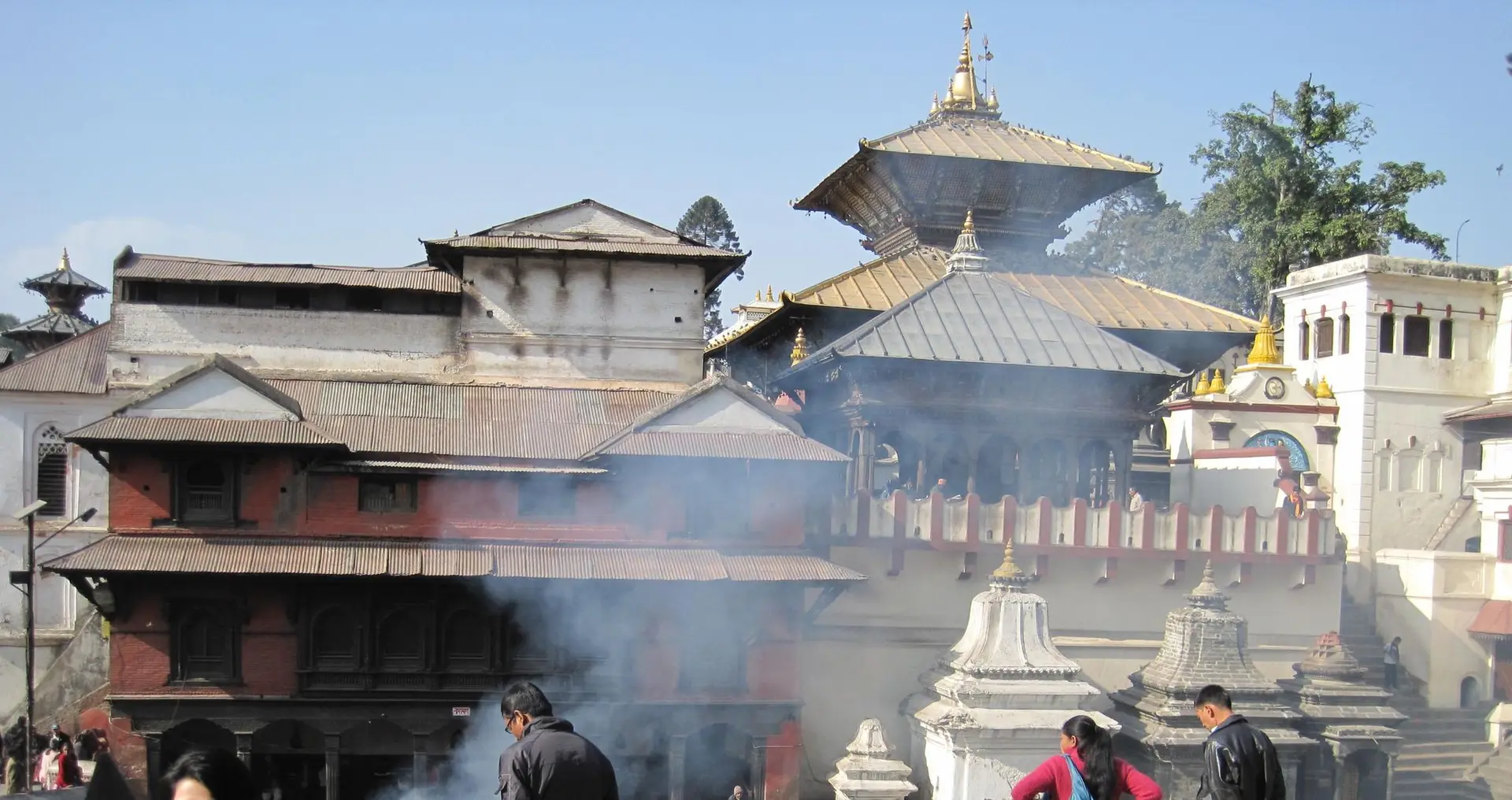
Pashupatinath is the most sacred Hindu temple in Nepal and one of the most important Shiva shrines in all of South Asia. You'll find it on the west bank of the Bagmati river, about 5 km east of central Kathmandu and close to the airport.
The main temple, a two-tiered pagoda with gilded roofs and silver-plated doors, is open to Hindus only. Don't worry, though: you can still see it from the terraces on the east bank, where a hillside of small stone Shiva shrines looks down over the river.
Below the temple are the ghats, the stone platforms where Hindu cremations take place most days. Families wash the body in the river before the cremation, and the ashes are given to the Bagmati afterwards. It's a deeply moving place to watch from across the river, and your guide will explain each step as it happens.
You'll also spot sadhus, Hindu holy men, sitting in the courtyards around the temple. Some are happy to pose for photos, but they'll expect a small donation in return.
Mornings are calm and peaceful. Every evening at around 6 PM there's the aarti, a fire ceremony with music and oil lamps on the riverbank, which is well worth staying for. During Maha Shivaratri, in February or March, hundreds of thousands of pilgrims and sadhus arrive at the temple, so expect crowds!
NPR 1,000 for foreign visitors (checked October 2026). Pashupatinath is part of our Kathmandu city tour and our half-day tour.
Heritage tours
Pashupatinath, Boudhanath, Swayambhunath and Kathmandu Durbar Square in one day, with your own guide and car, starting from your hotel.
Heritage tours
Kathmandu's holiest Hindu temple and its largest Buddhist stupa in one morning or afternoon, about four hours from your hotel and back.